
February 13, 2025
Ultimate Guide to Technical Screening for LATAM Developers
Learn effective strategies for technical screening of LATAM developers, addressing challenges like language barriers and time zone differences.
- Growing Talent Pool: By 2025, LATAM will have 2.2M developers, with Brazil leading at 573,400, followed by Mexico (225,300) and Argentina (134,000).
- Screening Essentials: Assess coding skills, English proficiency, and team fit through coding tests, live sessions, and cultural evaluations.
- Challenges: Address time zone differences, language barriers, and cultural nuances in interviews.
- Tools to Use: Platforms like HackerRank, Codility, and CodeSignal streamline technical assessments.
- Staff Augmentation: External services like CareMinds help with localized hiring and reduce recruitment costs by 30%.
Country
Developers
English Proficiency
Brazil
573,400
59%
Mexico
225,300
Data unavailable
Argentina
134,000
64%
Efficient technical screening combines coding evaluations, communication tests, and cultural fit assessments, ensuring a strong match for global teams.
How To Prepare For Coding Interviews
Key Steps in Technical Screening
Building on the core components outlined earlier, here are actionable steps to make LATAM talent evaluation more effective:
Setting Technical Requirements
Start by clearly defining technical requirements to make the screening process smoother. LATAM-focused teams often organize their requirements like this:
Requirement Category
Key Details
Priority
Technical Skills
Programming languages, frameworks, databases
High
Experience Level
Years of experience, industry expertise
High
Communication
English proficiency, documentation skills
Medium
Collaboration
Time zone compatibility, remote work skills
Medium
Tools & Platforms
Cloud services, version control, IDE knowledge
Medium
Research shows that companies with well-defined technical requirements cut their time-to-hire for tech roles by 40%.
Initial Candidate Review
The first step is to evaluate candidates’ backgrounds before moving to technical assessments. Focus on these areas:
- Portfolio projects and contributions to open-source work
- Professional experience that matches the role’s needs
- Technical blog posts or documentation examples
- Engagement in LATAM-specific tech communities
- Basic English communication abilities
Pro Tip: Use pre-screening questionnaires to quickly gauge technical knowledge.
Technical Tests and Code Reviews
According to DevSkiller, using work-sample tests reduces the likelihood of hiring unsuitable candidates by 50%.
Combine these methods for a thorough technical assessment:
- Coding Challenges: Use platforms like HackerRank to standardize evaluations.
- Take-home Projects: Assign tasks that reflect real-world scenarios.
- Live Coding Sessions: Assess candidates on:
- Problem-solving strategies
- Code organization
- How well they explain their design choices
“54% of developers consider effective communication more important than coding skills in their day-to-day work” – Stripe Developer Survey
These steps lay a solid foundation for addressing region-specific challenges, which will be discussed in the next section.
Common LATAM Hiring Obstacles
When hiring in LATAM, there are a few challenges that require tailored approaches to ensure a smooth process. Let’s break them down:
Interview Style Differences
Cultural nuances can influence how interviews are conducted and perceived. Here’s a quick comparison:
Aspect
LATAM Preference
Communication
Focus on building relationships first
Feedback Style
Critique tends to be indirect
Hierarchy
Formal authority is respected
To address these differences, consider these approaches:
- Bring in mixed interview panels trained in cultural nuances.
- Use both behavioral questions and technical assessments to get a well-rounded view of candidates.
- Start interviews with a conversational tone to help candidates feel at ease.
Time Zone Management
Scheduling can get tricky with time zone differences, which vary from 0 to 5 hours between LATAM and the US. Here’s how to handle it:
- Use scheduling tools that automatically adjust for time zones.
- Incorporate asynchronous assessments for early stages.
- Clearly communicate time expectations to avoid confusion.
Language and Technical Terms
Language barriers and region-specific technical terms can complicate the hiring process, especially for technical roles.
Challenge
Solution
Localized data structure terms
Conduct bilingual code reviews
Regional framework preferences
Use visual architecture diagrams
Here’s what you can do to overcome these challenges:
- Create glossaries of technical terms with visual examples to ensure clarity.
- Allow candidates to ask for clarification during interviews.
- Focus on how candidates solve problems, rather than their fluency in technical jargon.
Pair these strategies with code testing platforms to get a full picture of a candidate’s skills and potential.
sbb-itb-a3fbb4e
Screening Tools and Methods
Addressing region-specific challenges, these tools help streamline evaluations across different locations:
Code Testing Platforms
Platform
Languages
Focus
HackerRank
40+
Algorithm challenges
Codility
38
Practical coding problems
CodeSignal
Multiple
AI-driven assessments
CoderPad
Multiple
Live pair programming
Code Originality Checks
Ensuring originality in coding submissions involves multiple layers of detection:
Automated Tools
- MOSS (Measure of Software Similarity): Detects similarities in code submissions.
- JPlag**:** Compares submissions to existing solutions for overlaps.
- Platform Features: Platforms like Codility include built-in plagiarism detection.
When evaluating LATAM candidates, combine automated tools with manual reviews to consider local coding norms. Use time-restricted challenges and cross-verify results with multiple tools to ensure fairness and accuracy.
Team Fit Assessment
Technical skills matter, but integrating into a team also depends on compatibility in key areas:
Assessment Type
Tool/Method
Focus
Behavioral
STAR Method
Problem-solving approach
Cultural
Predictive Index
Alignment with company values
Technical
Pair Programming
Collaboration and teamwork
Communication
Written responses
Preparedness for remote work
For LATAM teams, use tools that evaluate flexibility for hybrid work setups, which are common in the region. Research indicates that 94% of hiring managers see better results when multiple assessment methods are used.
Virtual Collaboration Tests
Evaluate readiness for remote work through paired coding sessions and written communication exercises.
Working with Staff Augmentation Companies
For businesses looking to simplify hiring processes, especially in cultural and technical evaluations, staff augmentation services offer tailored solutions for challenges specific to the LATAM region.
CareMinds LATAM Services
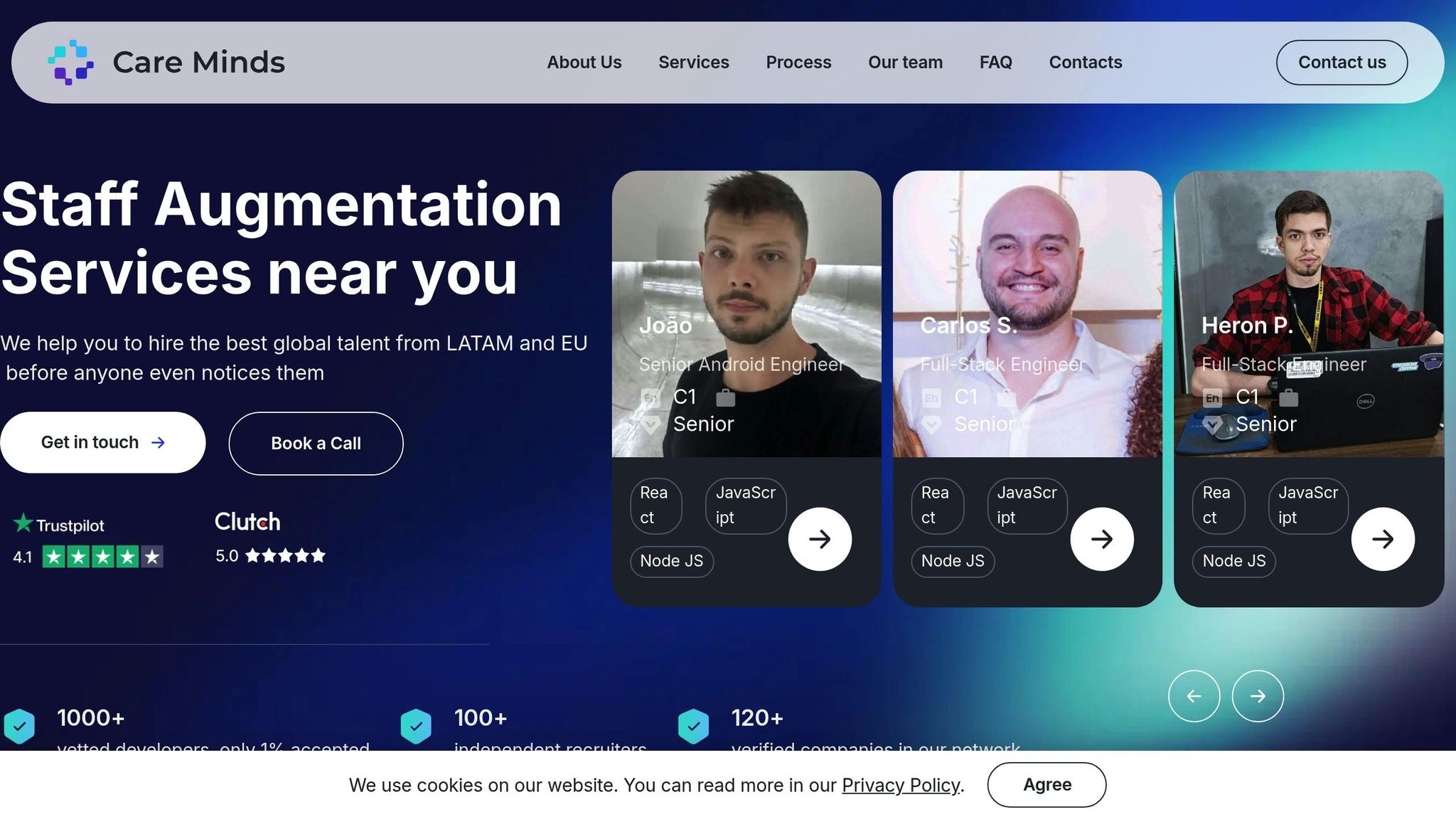
CareMinds uses a structured three-phase process to efficiently screen LATAM talent:
Screening Components
Key Elements
Initial Assessment
Technical skills check, Background verification
Deep Technical Review
Role-specific project challenges
Final Validation
Team compatibility, Communication evaluation
Their 3-day process tackles time zone and communication challenges by focusing on localized vetting. With stringent standards, only 3% of applicants make it into their talent pool.
What sets CareMinds apart? Localized HR support, risk-free trials, and options for long-term retention.
Benefits of External Screening
Using staff augmentation partners for external screening offers several advantages when hiring LATAM developers:
Cost Savings
Companies report cutting recruitment costs by 30% through streamlined processes and eliminating advertising expenses.
Faster Hiring
A US fintech startup built a team of five LATAM developers in just two weeks, slashing their usual hiring timeline by 60%.
Quality Control
Staff augmentation firms use thorough multi-stage vetting processes:
Assessment Area
Tools Used
Technical Skills
Project-based evaluations
Language Proficiency
Tests that include localized technical terms
Cultural Fit
Behavioral assessments
Regional Expertise
These partners bring a deep understanding of the LATAM market, ensuring technical and cultural alignment.
“Cultural proximity and time zone alignment make LATAM developers particularly valuable for US companies when combined with technical expertise.”
Conclusion
Main Points Review
Modern LATAM technical evaluations have seen notable improvements, with structured processes leading to an 87% increase in hiring success rates. These evaluations now strike a balance between technical skills and cultural fit, which is especially important in LATAM’s relationship-focused market.
Screening Component
Success Impact
Take-home Coding Challenges
63% developer preference
Changes in Technical Screening
The way companies evaluate LATAM talent has evolved significantly. For example, Globant’s 2022 program, which combined HackerRank challenges with asynchronous interviews, cut time-to-hire by 35% while boosting first-year employee performance by 28%.
Today, the average time-to-hire has decreased by 38%, now taking just 28 days. This faster process doesn’t sacrifice quality, thanks to advancements like:
- Smarter Assessment Tools: AI-driven platforms provide deeper insights into candidates’ abilities.
- Better Evaluation Metrics: Data-driven methods improve predictions of job performance.
- Efficient Processes: Asynchronous testing helps bridge time zone gaps.
Demand for LATAM talent has grown by 41% over the past two years. US companies hiring LATAM developers who incorporate both technical and cultural evaluations enjoy improved retention rates.
FAQs
How to answer technical interview questions for software engineer?
For candidates in LATAM preparing for technical interviews, these strategies can help you stand out:
Interview Component
Recommended Approach
Problem Understanding
Ask clarifying questions to confirm details.
Solution Planning
Clearly explain your thought process.
Code Implementation
Start with pseudocode, then refine and optimize.
When addressing technical questions:
- Clarify, plan, implement, and optimize: Talk through each step as you go. Spend the first 3–5 minutes ensuring you fully understand the problem before jumping into coding.
- Break it Down: Simplify complex problems by dividing them into smaller, manageable parts. Explain your reasoning as you go – this shows strong problem-solving skills.
- Write and Test: Focus on writing clean, maintainable code. Test your solution with multiple cases and discuss potential improvements or optimizations.
Key areas to emphasize:
- Share your experience with specific tech stacks.
- Use measurable results when discussing past projects (e.g., “improved API response time using caching”).
- Be ready to discuss how you’ve tackled challenges in previous roles.
LATAM technical interviews often evaluate:
- Communication skills: Be clear and concise in explaining your ideas.
- Team compatibility: Show how you align with team dynamics and collaboration styles.
- Flexibility: Demonstrate your ability to adjust to different workflows and environments.
For remote interviews:
- Check your tech setup ahead of time.
- Practice using collaborative coding tools.
- Adapt LATAM’s relationship-focused communication style to a virtual setting.
These tips align with earlier suggestions for managing your time and preparing effectively for interviews.