
March 12, 2025
How to Secure Remote Work in LATAM
Learn essential strategies to secure remote work in LATAM, focusing on compliance, access control, and effective training methods.
Remote work in LATAM is growing fast, but it comes with security challenges. Here’s how to keep your teams and data safe:
- Understand Privacy Laws: Countries like Brazil (LGPD) and Mexico (LFPDPPP) have specific data protection rules. Make sure you comply with consent, breach reporting, and local storage requirements.
- Set Up Strong Access Controls: Use multi-factor authentication (MFA) and role-based access control (RBAC) to limit access to sensitive data.
- Secure Communication: Implement VPNs with features like DNS leak protection and encrypted file-sharing tools.
- Train Your Teams: Regularly teach employees about phishing, password management, and incident response.
- Work with Trusted Providers: Services like CareMinds help hire vetted developers and ensure compliance with security standards.
Quick Tip: Focus on compliance, technical safeguards, and ongoing training to protect your remote operations in LATAM.
Best Practices For Cyber Security In Remote Work & Home Offices
Data Privacy Laws in LATAM
Data privacy regulations in Latin America are increasingly aligning with the EU’s GDPR. Knowing these laws is essential for ensuring secure remote work practices.
Current Privacy Laws by Country
Brazil’s Lei Geral de Proteção de Dados (LGPD), effective since September 2020, stands out as one of the region’s most detailed data protection regulations. It requires companies to obtain clear consent for data collection, put in place strong security measures, report breaches promptly, and appoint a Data Protection Officer (DPO).
Here’s a quick look at key data privacy laws across LATAM:
Country
Primary Law
Key Requirements
Penalties
Brazil
LGPD
Consent for data use, DPO appointment, breach notifications
Fines vary depending on violations
Mexico
LFPDPPP
Clear privacy notices, protection of data subject rights
Penalties depend on the infraction
Argentina
PDPA
Register data practices, follow cross-border transfer rules
Sanctions based on national law
Colombia
Law 1581
Authorization needed for data processing
Fines and other legal consequences
Remote Team Legal Requirements
To comply with these laws while managing remote teams, businesses must adopt specific legal measures:
- Data Processing Agreements: Ensure every remote worker handling sensitive information signs a clear agreement outlining their responsibilities and the company’s data protection policies.
- Cross-Border Data Transfers: Use legal safeguards for transferring data outside LATAM. For example, if dealing with Brazilian customer data, include contractual clauses that meet local standards.
- Local Storage Rules: Adhere to country-specific requirements for storing certain types of personal data on local servers.
- Documentation and Training: Keep detailed records of data processing activities and provide regular training sessions covering:
- Privacy policy acknowledgment
- Security procedures
- Incident response steps
- Compliance checks
Additionally, implement technical solutions like encrypted communication, strict access controls, and activity monitoring systems to secure sensitive data and stay compliant with local regulations.
Access Control and Authentication Setup
Secure sensitive data for remote LATAM teams by implementing strong access control measures and modern authentication systems.
Setting Up Multi-Factor Authentication
To enhance security, take these steps:
- Choose reliable MFA platforms that work well across LATAM’s varied networks and support both Spanish and Portuguese.
- Establish strict policies, such as requiring complex passwords that are updated regularly, limiting failed login attempts, and setting session timeouts.
- Use SMS-based backup verification that supports both international and local phone numbers.
Once MFA is in place, strengthen security further by enforcing role-based access controls.
Managing Access Permissions
Role-based access control (RBAC) limits access to only the resources required for specific roles. Here’s an example framework:
Access Level
Permissions
Verification Requirements
Basic User
Read-only access to documents
Primary MFA verification
Team Lead
Read/write access to resources
Enhanced MFA with additional checks
Admin
Full system access
Comprehensive multi-factor checks
When setting up access controls, keep these best practices in mind:
- Document and Review Roles: Clearly map out which resources each role can access, and review these mappings regularly to ensure they stay relevant.
- Apply Zero Trust Principles: Limit access to only what’s essential for each role, especially when dealing with sensitive client data subject to LATAM privacy laws.
- Monitor Activity: Use tools like SIEM to track login locations, access attempts, and unusual behavior. Regular monitoring helps detect potential breaches early and ensures compliance with local regulations.
These steps, combined with continuous monitoring, create a strong security framework for your remote teams.
sbb-itb-a3fbb4e
Remote Communication Security
Protecting communication is a top priority for LATAM remote teams. Using VPNs and encrypted file-sharing systems helps keep sensitive information safe.
VPN Implementation Guide
Follow these guidelines to set up a secure VPN:
VPN Feature
Security Requirement
Implementation Priority
Split Tunneling
Limit access to essential work applications
High
Kill Switch
Automatically disconnect if the VPN fails
Critical
DNS Leak Protection
Shield DNS queries from exposure
High
Connection Logs
Keep records for compliance purposes
Medium
Key steps for VPN setup include:
- Deploying enterprise-grade VPNs that support both IPv4 and IPv6.
- Configuring the VPN to connect automatically at startup.
- Establishing backup servers in various LATAM locations for redundancy.
- Regularly monitoring connection metrics from critical regions.
In addition to VPNs, ensuring secure file-sharing practices is essential for seamless and protected collaboration.
Secure File Sharing Methods
Adopt encrypted file-sharing systems that comply with local data privacy regulations.
1. End-to-End Encryption Setup
Use AES-256 encryption for file sharing. Ensure proper key management protocols are in place across all remote systems.
2. Secure File Storage Configuration
Set up regional storage solutions to meet data residency needs. Key measures include:
- Encrypting data at rest and maintaining detailed access logs.
- Enabling version control and regular backups.
- Configuring secure sharing options for external collaborators.
- Activating automated audit trails for tracking activity.
3. Document Collaboration Security
Enhance real-time collaboration by implementing:
- Encryption at the document level.
- Fine-tuned permission settings for access control.
- Watermarking sensitive documents to prevent misuse.
- Secure annotation tools for added protection during editing.
Security Training for Remote Teams
Effective security training protects data and ensures compliance with local regulations. Beyond technical safeguards, training helps address human vulnerabilities in remote work setups.
Creating Security Training Materials
Develop training materials tailored to the unique security challenges of remote work in LATAM. Focus on practical, scenario-based learning.
Training Component
Purpose
Implementation Method
Phishing Simulations
Test awareness of email threats
Monthly targeted campaigns
Password Management
Promote strong authentication practices
Interactive workshops
Data Privacy Laws
Support compliance with regulations
Country-specific training modules
Incident Response
Clarify emergency procedures
Role-based scenarios
- Localized Security Protocols: Design materials that reflect local laws and cultural contexts, such as Brazil’s LGPD and Mexico’s Federal Law on Protection of Personal Data. Include real-life examples for better understanding.
- Interactive Learning Platforms: Use engaging tools like:
- Virtual reality simulations to identify security threats
- Quizzes based on real-world scenarios
- Role-playing exercises for incident responses
- Gamified modules with progress tracking
These methods make training more engaging and help retain knowledge over time.
- Documentation and Resources: Provide bilingual resources, including:
- Step-by-step guides for security procedures
- Emergency response manuals
- Data handling protocols
- Access management workflows
These resources ensure teams have ongoing support and reference materials to tackle new threats.
Maintaining Security Awareness
Regular training is key to keeping security policies effective and ensuring teams stay alert.
Regular Security Updates
- Host bi-weekly security briefings
- Share real-time alerts about emerging threats
- Conduct quarterly security evaluations
- Monitor training completion and comprehension rates
Continuous Learning Program
Time Frame
Activity
Objective
Weekly
Security tips newsletter
Highlight new threats and solutions
Monthly
Virtual security workshops
Focus on specific security topics
Quarterly
Compliance refresher courses
Provide updates on regulations
Annually
Certification programs
Test and validate security skills
Performance Monitoring
Track progress through monthly quiz results, phishing test outcomes, incident reports, and compliance metrics. Introduce a rewards system to acknowledge team members who consistently excel in maintaining security standards and contribute to a strong security culture.
CareMinds: Remote Work Security Solutions
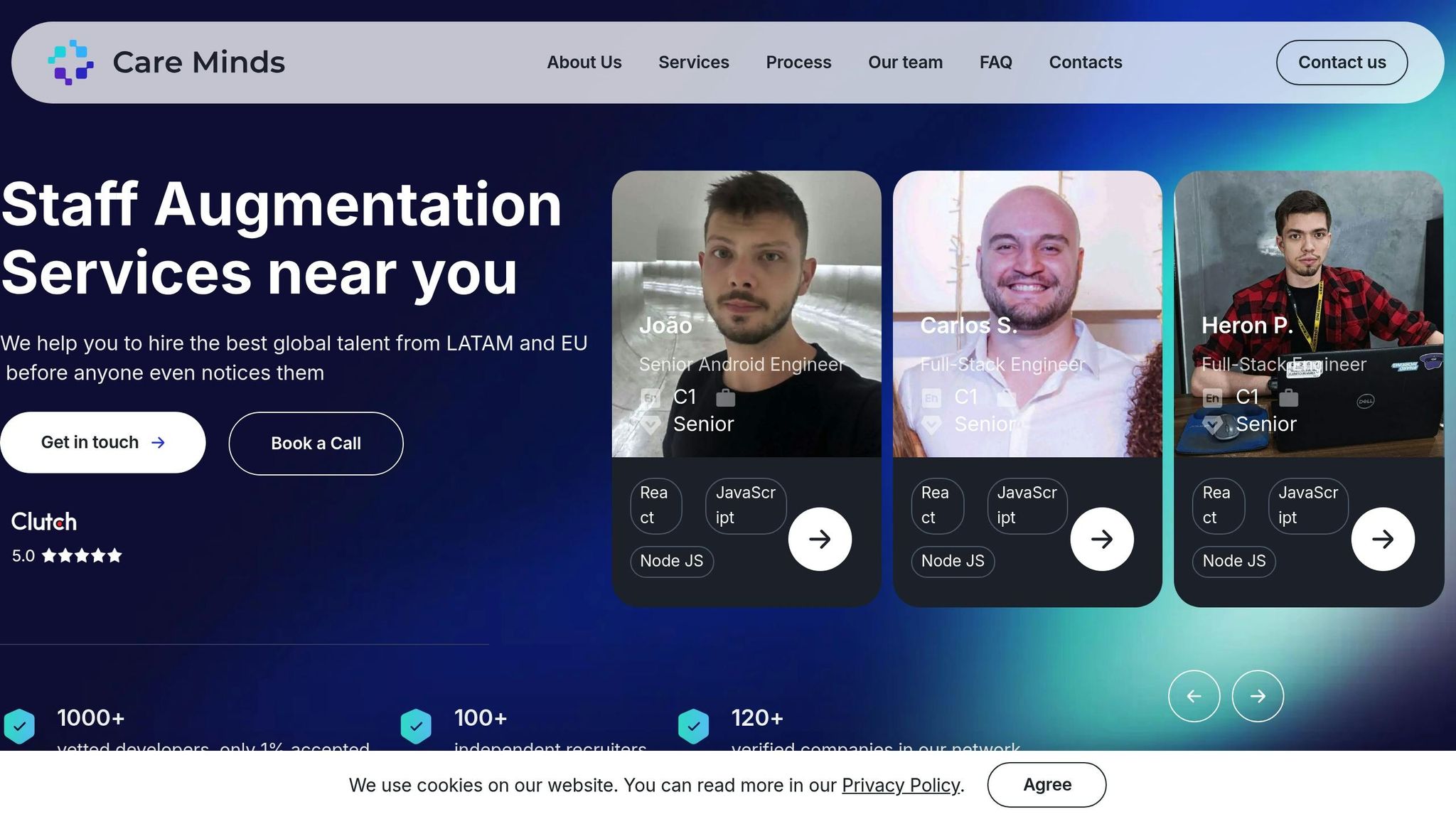
CareMinds strengthens remote work security by combining top-tier staffing with robust operational measures. For businesses in LATAM, this means access to skilled professionals while ensuring high-security standards. Here’s how CareMinds achieves this balance.
Fast Remote Team Hiring
CareMinds follows a detailed screening process to ensure only the best candidates are selected:
Vetting Stage
Purpose
Resume & LinkedIn Review
Initial screening of qualifications
Technical Interview
Testing technical and security skills
Soft Skills Interview
Assessing communication and team compatibility
With only 1% of developers making the cut, businesses can trust that their teams meet strict security requirements.
Remote Work Security Management
CareMinds doesn’t stop at hiring. They embed security into daily operations with these key practices:
- Streamlined Onboarding: New hires complete onboarding within two weeks, ensuring security protocols and compliance standards are in place from day one.
- Risk Management: A two-week trial period allows companies to confirm both technical abilities and adherence to security practices.
- Ongoing Support: CareMinds supports over 120 verified companies, offering continuous administrative assistance to maintain security standards.
“We help you to hire the best global talent from LATAM and EU before anyone even notices them” – CareMinds
This approach allows businesses to scale their remote operations quickly and securely.
Conclusion: Securing Remote Work in LATAM
Ensuring secure remote work in LATAM demands a mix of advanced tools, thorough training, and expert guidance. The goal is to strike a balance between quickly hiring talent and maintaining strict data security.
Key Steps to Implementation:
A strong vetting process combined with ongoing security oversight is essential. For example, CareMinds showcases this approach with its detailed candidate screening process.
Reducing Risks with Professional Services:
Staff augmentation services bring several security-focused benefits:
Security Aspect
Benefit
Talent Vetting
Candidates are carefully screened through an in-depth evaluation process.
Onboarding Speed
Quick integration, with most hires completed in about two weeks.
Risk Management
Trial periods allow businesses to test and confirm compliance with security standards.
Ongoing Support
Continuous HR and administrative help ensures smooth and secure remote operations.
Preparing for Remote Work Challenges Ahead:
As remote work expands in LATAM, companies need adaptable security measures. Services like CareMinds provide end-to-end support, including administrative help and flexible engagement rates starting at $31/hour. These solutions help businesses scale while staying secure, ensuring they’re ready for future challenges.
The key to success lies in thorough talent evaluation, focused training, and consistent support. By following proven security measures and partnering with reliable providers, companies can create remote teams that safeguard sensitive data and promote growth.